How Activity Thresholds Determine Access to Interactive Table Features in Digital Betting Platforms
Written by Drew Patterson · Jul 9, 2026
How Activity Thresholds Determine Access to Interactive Table Features in Digital Betting Platforms
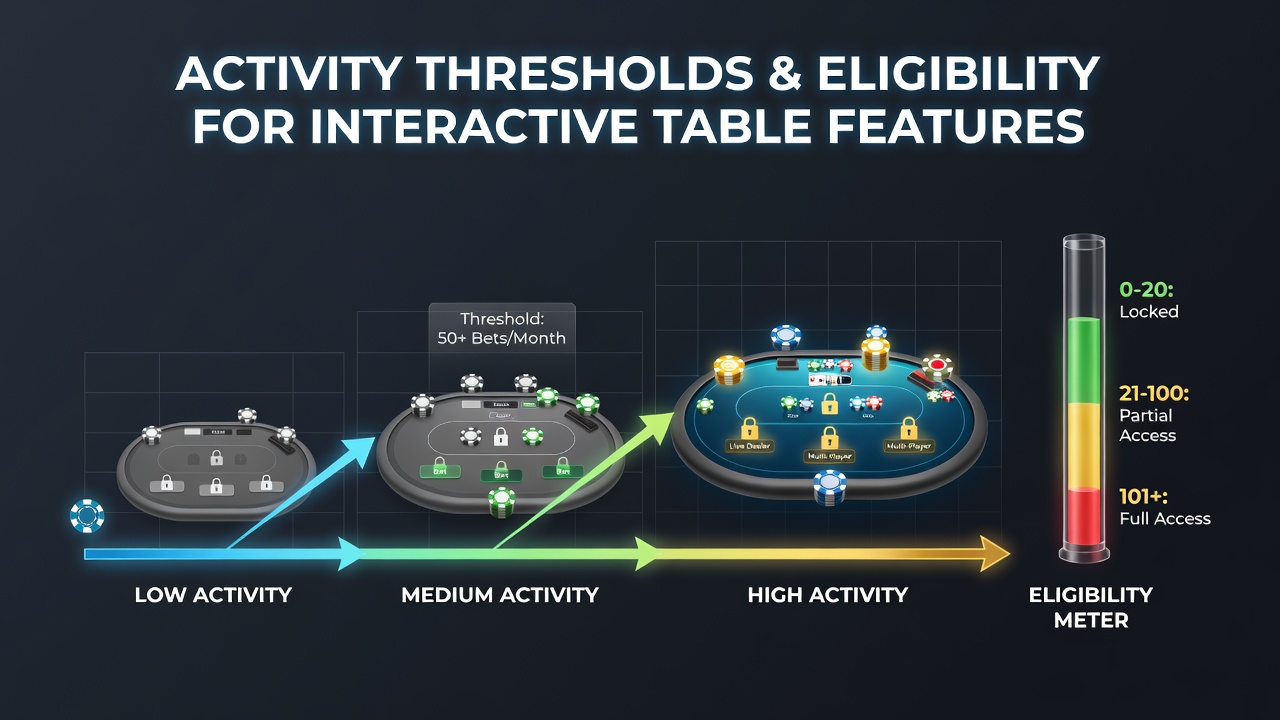
Activity thresholds function as structured benchmarks that platforms establish to control which users gain entry to interactive table features such as live dealer blackjack, roulette, and baccarat sessions, and these benchmarks typically combine metrics including total wagered amounts, session frequency, and deposit volume over defined periods.
Defining Activity Thresholds in Digital Betting Systems
Operators calculate eligibility through layered criteria where a user must reach specific volumes of play before unlocking real-time table interactions, and this structure emerged as platforms expanded mobile and desktop offerings to manage server loads while directing traffic toward higher-engagement products.
Research from industry monitoring groups indicates that thresholds often reset monthly or quarterly, which means participants track cumulative activity across multiple games rather than isolated sessions, and systems automatically update status once a user crosses the designated line.
Mechanics of Eligibility for Live Table Access
Interactive table features require verified activity levels because operators route these sessions through dedicated live studios that incur higher operational costs than automated slots, so platforms gate entry to ensure only active accounts consume those resources.
One common model requires a minimum of 500 units wagered within a 30-day window before a user receives an invitation to private tables, while another approach ties eligibility to consecutive login days combined with at least three deposits of varying sizes, and both models appear across major platforms operating in regulated markets.
Data from North American regulatory filings show that accounts meeting these benchmarks demonstrate longer average session times once granted table access, which suggests the thresholds effectively segment users by engagement depth.
Regional Variations in Threshold Application
Platforms licensed in the United States apply thresholds that align with state-specific reporting requirements, whereas operators serving Canadian provinces incorporate additional loyalty tier data to adjust entry points, and European markets outside the UK often link thresholds to responsible gambling markers tracked by national authorities.
According to figures released by the Nevada Gaming Control Board, digital betting activity in the first half of 2026 reflected steady growth in table game participation once users cleared initial activity hurdles, and similar patterns surface in reports from the Australian Communications and Media Authority.
These regional differences mean a user moving between jurisdictions encounters shifting requirements, and platforms therefore maintain separate tracking systems for each license to remain compliant.
Impact on User Progression and Feature Availability
Users who maintain consistent deposit and play patterns cross thresholds more quickly, which grants them earlier access to multiplier-enhanced tables or exclusive dealer streams, while sporadic participants remain limited to standard automated options until activity accumulates.
Studies conducted by academic researchers at institutions examining gambling behavior have documented that threshold systems create visible progression paths, and one analysis of platform data from 2025 found that 68 percent of accounts reaching the first eligibility tier proceeded to higher tiers within the following quarter.
July 2026 updates to several major platforms introduced dynamic thresholds that adjust based on overall network activity, allowing operators to balance live table capacity during peak periods without static cutoffs.
Technical Implementation Across Platforms
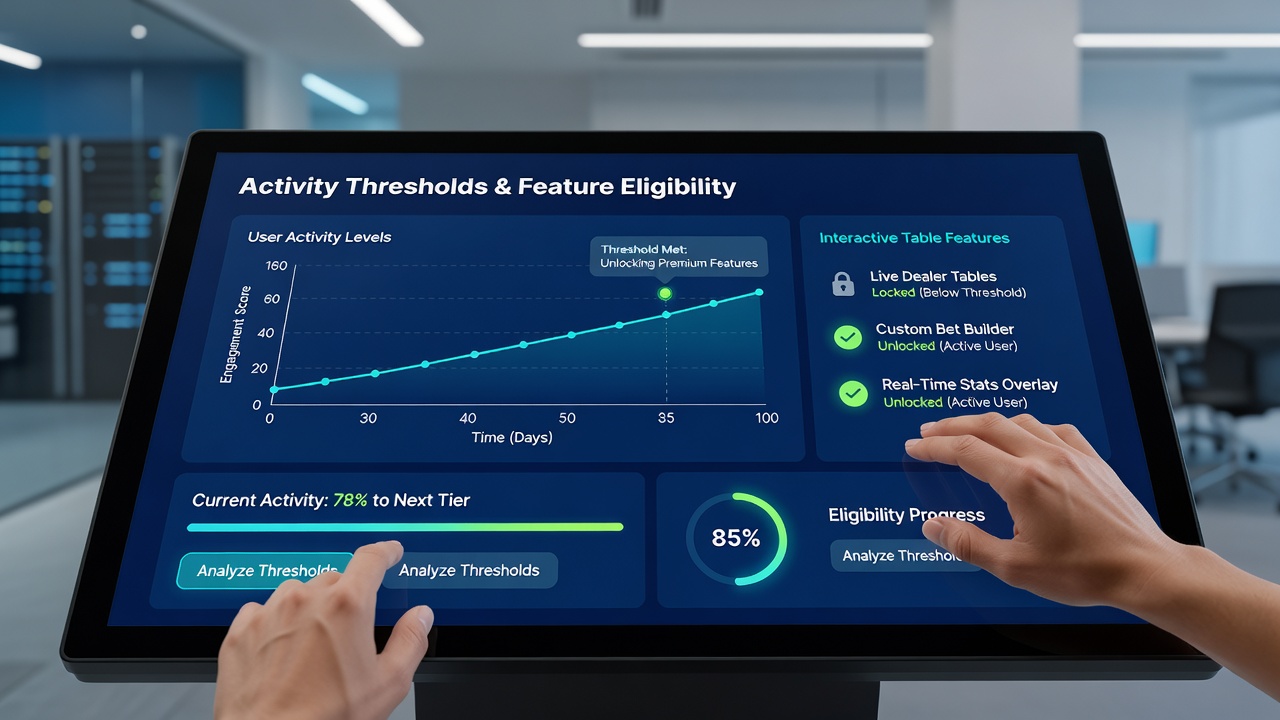
Backend systems monitor activity through real-time APIs that feed into loyalty engines, and these engines trigger eligibility notifications once criteria are met, yet the exact formulas remain proprietary although public documentation from licensing bodies outlines minimum transparency standards.
Platforms integrate these thresholds with payment processors so that deposit history directly influences table access speed, and users receive progress indicators within their account dashboards to encourage continued engagement.
Conclusion
Activity thresholds serve as the primary gatekeeping mechanism for interactive table features in digital betting environments, and their design directly influences which accounts receive live dealer access at any given time. Operators refine these systems continuously to match regulatory demands and operational capacity across different markets, while users navigate the requirements through sustained play and deposit patterns. The structure creates measurable segmentation that platforms use to allocate live studio resources efficiently, and ongoing developments in mid-2026 indicate further integration with mobile tracking tools to maintain consistency across devices.